
Meaningful Shift in Super Visa Eligibility
- March 23, 2026
- Kunpeng Global
- 4:43 pm
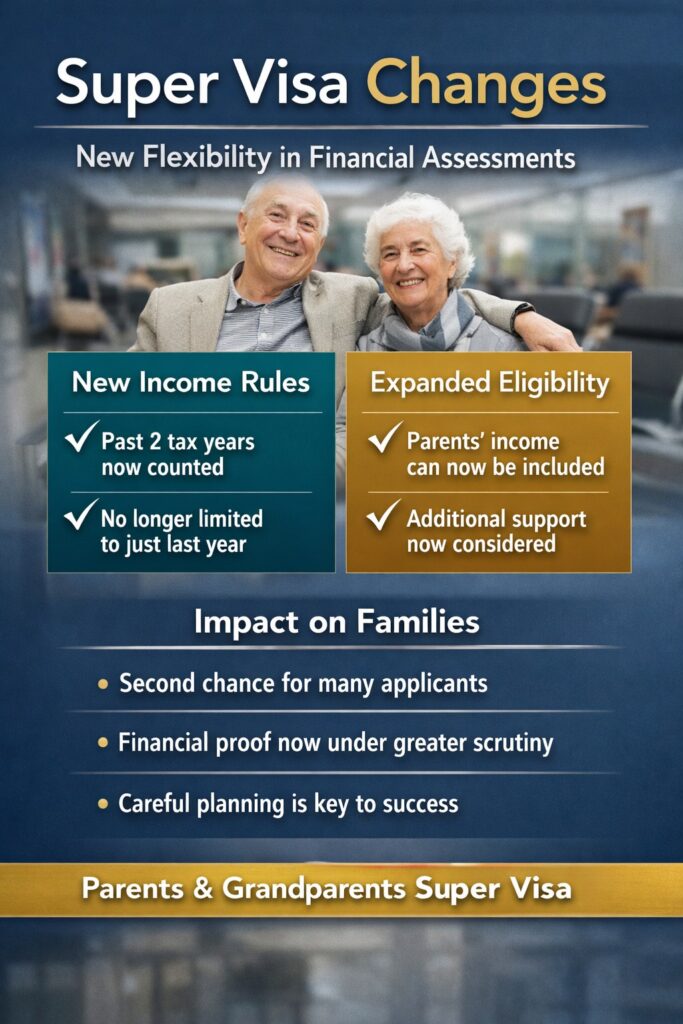
Immigration, Refugees and Citizenship Canada (IRCC) has adjusted how financial eligibility is assessed under the Parents and Grandparents Super Visa. The change is not dramatic on its face, but it will affect real outcomes, providing greater flexibility and creating broader access.
What has changed:
• Income is no longer restricted to the most recent taxation year. Either of the last two years may now be considered, allowing for a more balanced view where income has fluctuated.
• Financial assessment is no longer limited to the host and co-signer. Where there is a shortfall, the visiting parent or grandparent’s own income may be taken into account.
Why this matters:
• Applicants who were previously refused due to a single weaker year may now meet the requirement.
• Families that narrowly missed the threshold may have a viable path forward.
• The assessment better reflects how families actually manage financial support.
What this means in practice:
• Meeting the requirement is no longer purely numerical. Elligibility assessments will become more nuanced and fact-specific.
• File preparation and documentation strategy will carry greater weight.
• Timing of submission may affect the outcome. The change will take effective very soon.
The Super Visa remains a financial test. The difference now is that the test is less rigid and more dependent on how the evidence is presented.