
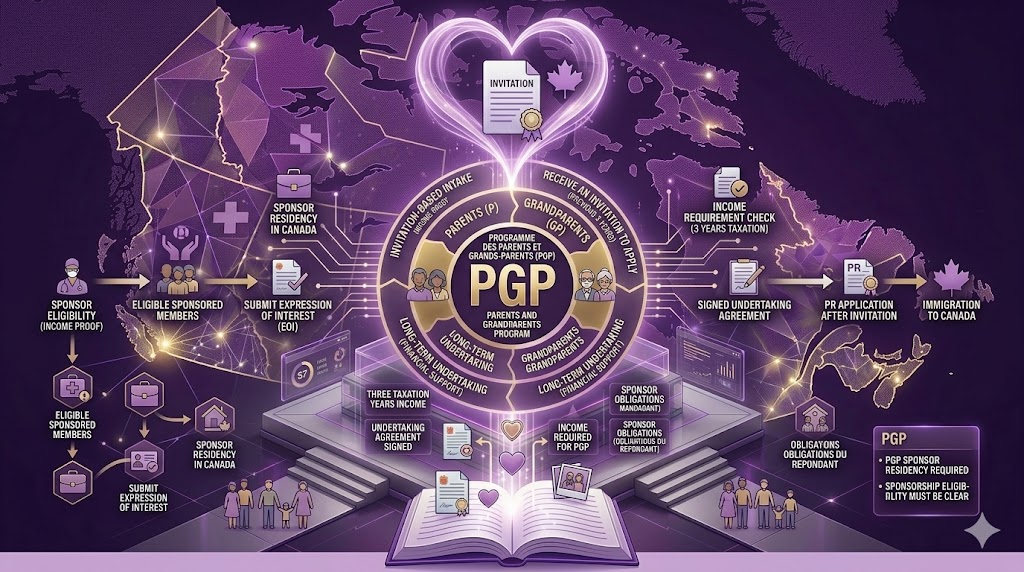
Parents and Grandparents Sponsorship
The Parents and Grandparents Program (PGP) allows Canadian citizens and permanent residents to sponsor their biological or adopted parents and grandparents for permanent residence. The program operates through an invitation-based intake system, and sponsors must first receive an invitation to apply. Sponsors must meet the minimum income requirement for the three taxation years preceding the application and sign a long-term undertaking to provide financial support for the sponsored family members after they become permanent residents.
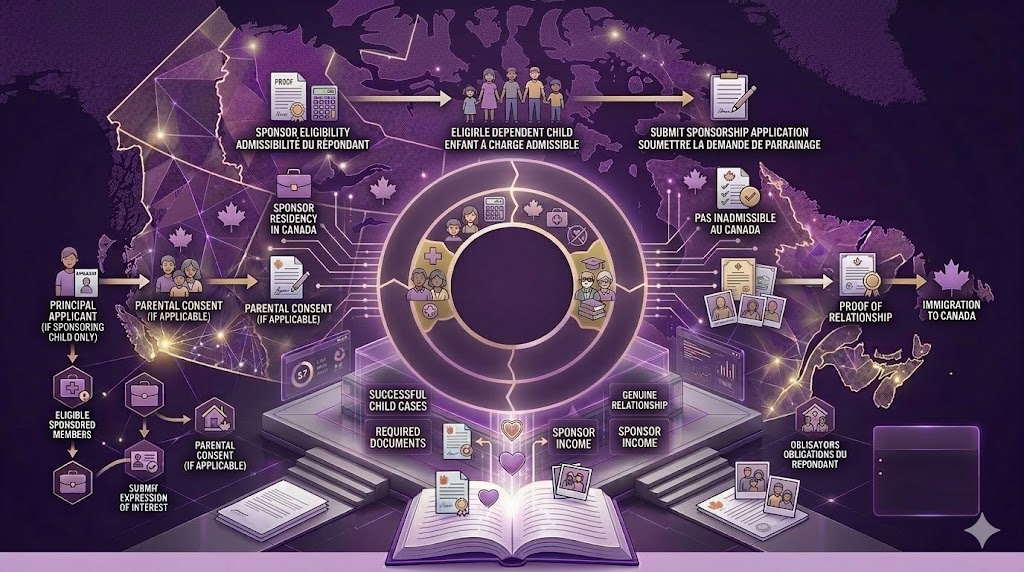
Dependent Child Sponsorship
Dependent Child Sponsorship allows Canadian citizens and permanent residents to sponsor an eligible dependent child for permanent residence. The child must meet the definition of a dependent under Canadian immigration regulations and must not be inadmissible to Canada. In certain cases, a child may qualify as a dependent due to a physical or mental condition that prevents financial self-support. If sponsoring only a child (without a spouse or partner), the child becomes the principal applicant, and the sponsor may need to provide evidence that the other parent or legal guardian consents to the child’s immigration to Canada.
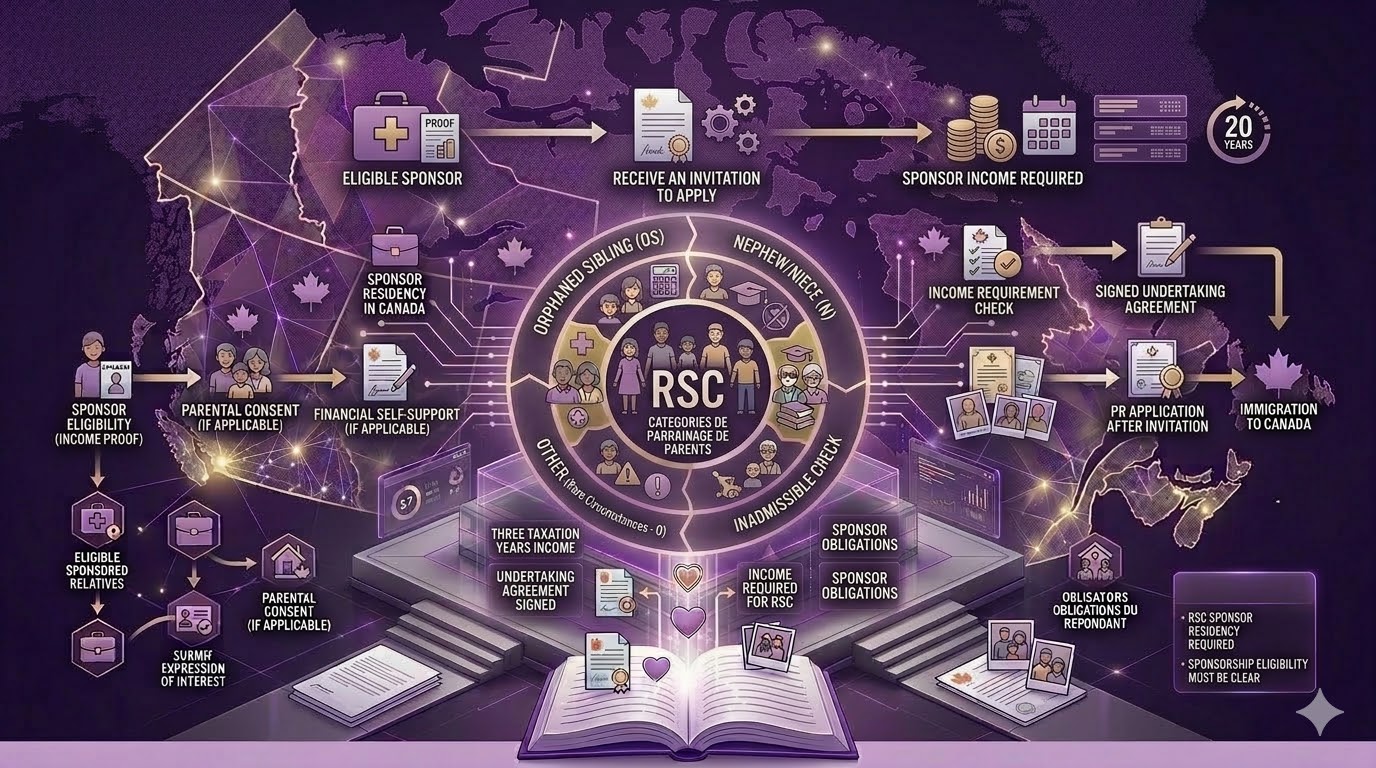
Other Relative Sponsorship
In limited and exceptional cases, Canadian citizens and permanent residents may sponsor certain relatives for permanent residence. Sponsors must be at least 18 years old, reside in Canada, meet income requirements, and sign an undertaking to financially support the sponsored relative (and any accompanying family members) for up to 20 years, depending on the relationship. This category typically applies to an orphaned sibling, nephew, niece, or grandchild under 18 who meets strict eligibility criteria. In rare circumstances, a sponsor may be eligible to sponsor one additional relative of any age if no other close family members or eligible relatives are available in Canada. All sponsored individuals must not be inadmissible to Canada.