
Key Points About TR to PR 2026
- April 13, 2026
- Kunpeng Global
- 10:31 pm
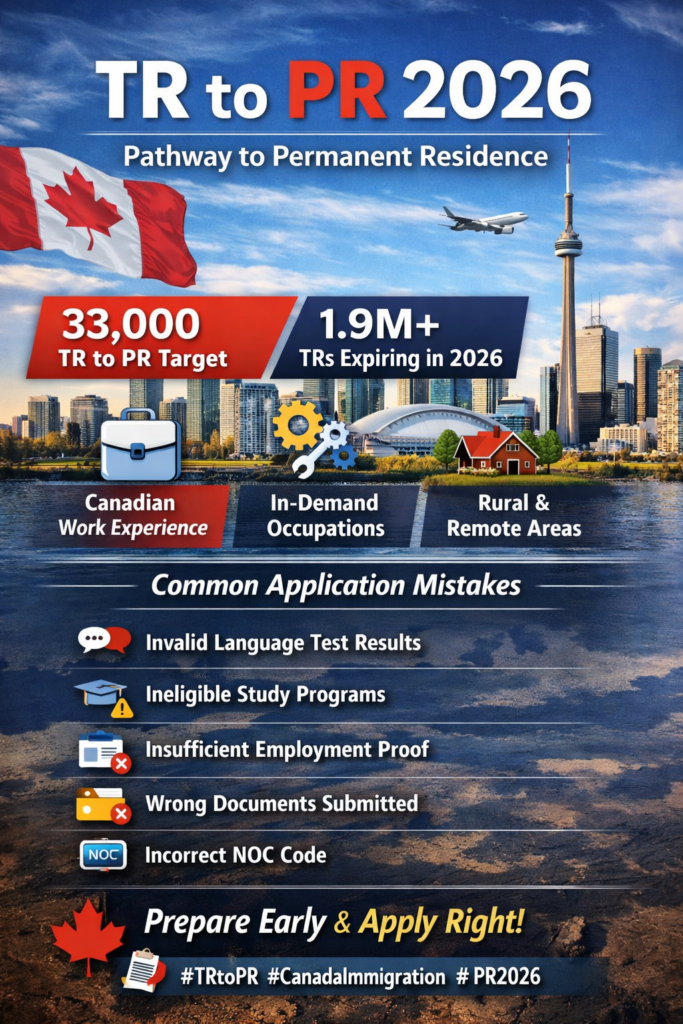
Canada’s immigration policies are undergoing significant adjustments. A key policy direction is to reduce the number of temporary residents while facilitating transitions to permanent residence for those aligned with economic priorities.
According to IRCC planning targets, approximately 33,000 temporary residents may transition to permanent residence. At the same time, over 1.9 million temporary resident statuses are expected to expire in 2026, which will place pressure on extensions and program intake.
In this context, future TR to PR pathways may consider remaining work permit validity as a relevant factor, in addition to core eligibility criteria.
Likely Selection Priorities 🎯
Based on prior programs and policy trends, IRCC is expected to prioritize applicants who:
• Have Canadian work experience
• Are employed in in-demand occupations (TEER-based roles)
• Are working in rural or remote regions
Applicants meeting the above criteria, especially those with limited remaining work authorization, should begin preparing early.
Lessons from the 2021 TR to PR Pathway
Based on decisions from the Federal Court of Canada, the following are common refusal factors:
1. Language results not valid at submission
Applications were refused where language test results were expired or below required thresholds at the time of submission, even if updated later.
Key point: Requirements must be met at submission.
2. Ineligible international graduate programs
Some applicants did not meet program requirements, including:
• Minimum 1,800 hours of study
• Required program duration
3. Insufficient proof of employment
Common issues include:
• Inconsistent employment dates
• Failure to provide supporting documents such as employment agreements
4. Incorrect document submission
Submitting the wrong document may result in the application being deemed incomplete.
5. Incorrect NOC selection
NOC codes must be based on job duties, not job titles. Misclassification can lead to refusal.
Final Note
Prepare early, ensure all requirements are met at the time of submission, and seek professional guidance where necessary.
Disclaimer ⚠️: The above analysis is based on prior TR to PR pathways and available data. Future program requirements may differ once officially released by IRCC.