
Bar raised on Study Permits
- July 6, 2026
- Kunpeng Global
- 4:30 pm
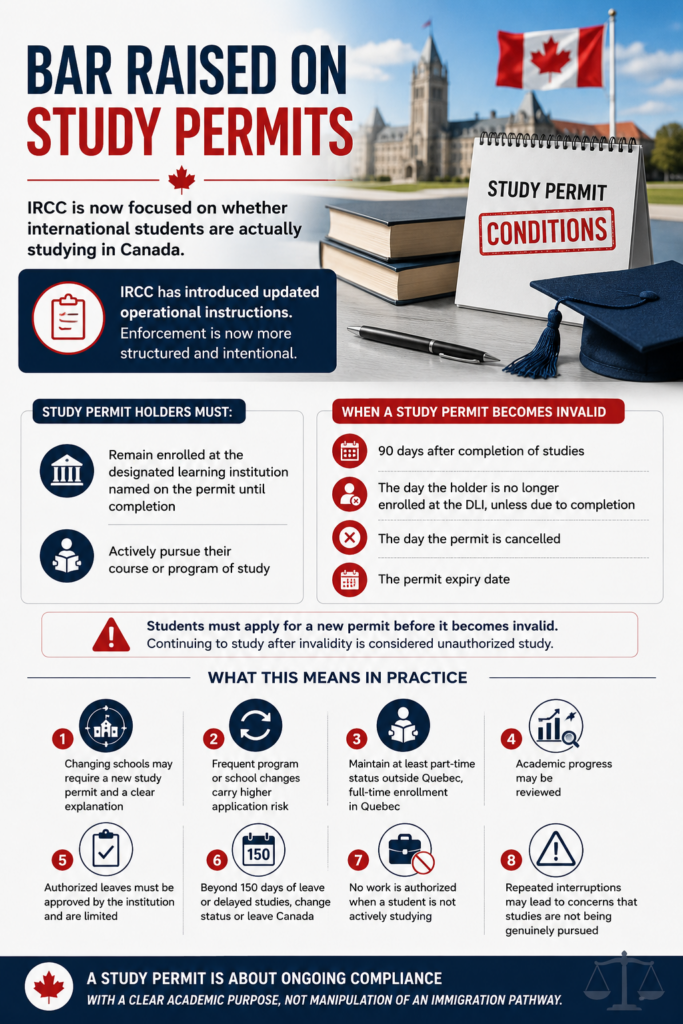
IRCC is increasingly focused on whether international students are actually studying in Canada.
During the previous relaxed policy period, post approval monitoring of study permits was limited, which led to a range of compliance issues.
In June, IRCC introduced updated operational instructions on assessing compliance with study permit conditions. Enforcement is now more structured and intentional.
Under subsection 220.1(1) of the Immigration and Refugee Protection Regulations, study permit holders must meet both conditions:
a. Remain enrolled at the designated learning institution named on the permit until completion;
b. Actively pursue their course or program of study.
Under R222(1), a study permit becomes invalid on the earliest of the following:
• 90 days after completion of studies;
• The day the holder is no longer enrolled at the designated institution, unless due to completion;
• The day the permit is cancelled;
• The permit expiry date.
Students must apply for a new permit before it becomes invalid. Continuing to study after invalidity is considered unauthorized study.
What this means in practice:
1. Changing schools may require a new study permit and a clear explanation, as permits are tied to a specific DLI.
2. Frequent program or school changes carry higher application risk.
3. Students must maintain at least part time status outside Quebec, and typically full time in Quebec.
4. Academic progress may be reviewed.
5. Authorized leaves must be approved by the institution and are limited.
6. Beyond 150 days of leave or delayed studies, students are expected to change status or leave Canada.
7. No work is authorized when a student is not actively studying.
8. Repeated interruptions may lead to concerns that studies are not being genuinely pursued.
After all, a study permit is about ongoing compliance with a clear academic purpose, not manipulation of an immigration pathway.