
Francophone Immigration Is Expanding Across Canada
- May 12, 2026
- Kunpeng Global
- 11:43 pm
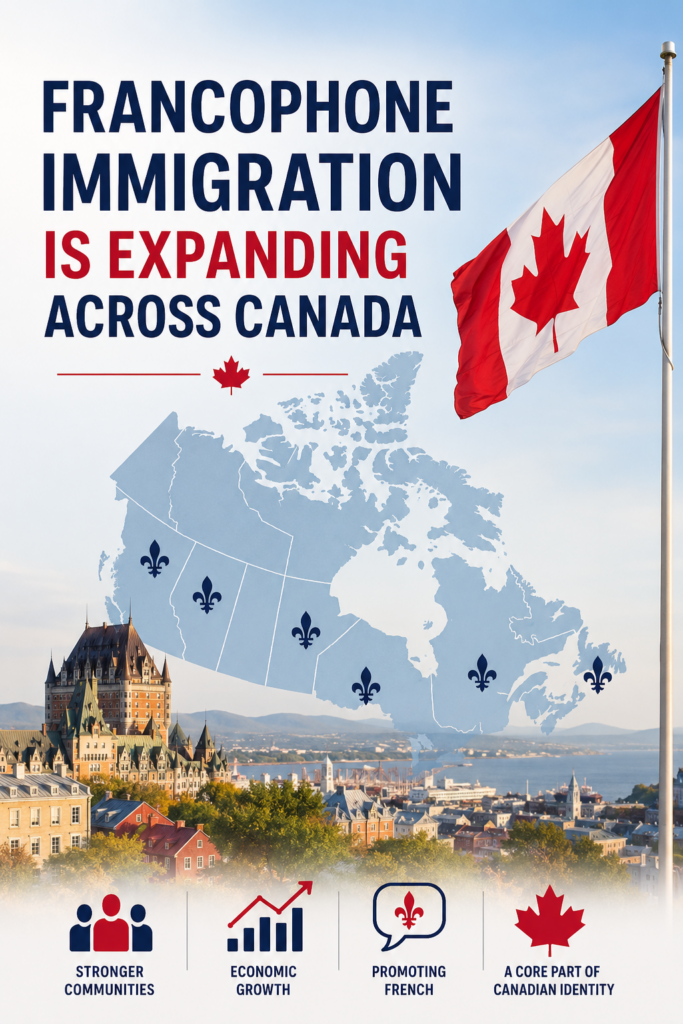
French-speaking newcomers are an essential workforce in Francophone and Acadian minority communities outside Quebec, and they make a strong contribution to Canada’s economic vitality. They help communities thrive while promoting French as an official language, a core part of Canadian identity.
For these reasons, Canada has reaffirmed its commitment to Francophone immigration. In 2026, IRCC continues to prioritize French-speaking applicants through targeted selection and increased flexibility for provinces and territories under the Provincial Nominee Program (PNP).
How Provinces Are Responding
Alberta (AAIP)
No dedicated Francophone stream. Candidates with NCLC 5 French may receive targeted consideration but must still meet existing pathway requirements.
Yukon (YNP)
French-speaking candidates (typically NCLC 5) are prioritized within existing streams. No separate stream.
Newfoundland & Labrador (NLPNP)
Prioritizes candidates who support Francophone immigration objectives. Selection may consider French ability and ties to Francophone communities.
British Columbia (BC PNP)
Using its allocation strategically, with priority given to French-speaking teachers in the public education system.
New Brunswick (NBPNP)
A clear leader in Francophone immigration.
Dedicated pathways with broad occupation eligibility and frequent targeted draws.
Manitoba (MPNP)
Has Francophone-focused pathways tied to community connection, but not all French speakers qualify automatically.
Northwest Territories (NTNP)
Offers a Francophone stream across TEER 0–5 occupations, processed on a first-come, first-served basis, without an EOI system.
Ontario (OINP)
Well-established French-Speaking Skilled Worker stream requiring NCLC 7 French.
⚠️ A major program update is expected, criteria may change.
In many cases:
👉 NCLC 5 French + existing eligibility = access to priority selection
The Reality
Learning French has become a strategic pathway for candidates with lower CRS scores.
But let’s be honest:
French is difficult.
I have personally spent years learning it; progress takes discipline, consistency, and real commitment.
For some, it may be the breakthrough option.
For others, it may not be the most efficient path.
The real question is:
Do you actually know all your options before committing to it?